Feeds:
Posts
Comments

Posts Tagged ‘altie / alternative’

One of the cooler conservation organizations out there, the Center for Biological Diversity, sent me a postcard with a beautiful red fox looking at me with the poem “Keeping Quiet” beside. It’s by Pablo Neruda and I hope you’ll read it and mull it over, maybe even recognize it as your natural state, one that seems to have been forced upon many people these days who are so used to unceasing hustling. Without going on about it, I had never read this poem before, and it perfectly reflects the way to combat this gospel of profit margin, of anthropocentric growth, of getting ahead that so pervades human endeavor.

Speaking of celebrating the profitless, have you voted in the Signac puzzle piece poll yet?

I’ve been spending some more time with Divine Discontent by Sixpence None The Richer, listening more closely and associations that were vague now register.

There is the Crowded House cover, track 4, and one that brings to mind Alanis Morissette (5), early late Beatles (10), Bacharach or Alpert (11), and not sure, but someone (12), all delivered with Leigh Nash’s rich vocals and Matt Slocum’s rich orchestration and deft (along with Sean Kelly) guitar playing.

As usual, the best songs are the ones penned by Slocum alone. There’s even a developing “hat trick,” as I call a wonderful succession of three songs that lead off the somber festivities: “Breathe Your Name,” “Tonight,” and “Down and Out of Time.” This last is my favorite song at this point, and one Nash also contributed to.

Slocum’s songwriting remains at the high level of their big hit album, and his vulnerability and confessional knowledge of his own weaknesses remains as well. “I’ve Been Waiting” hooks you in and takes the breath away. “Down and Out of Time” captures some of the song that began their previous album“We Have Forgotten” has this lashing out: “don’t go, I’ll shoot you down.” “Down and Out of Time” says, “I aim my cannon at you ready or not / You’re gonna feel my pain like it or not.”

There’s no nicer song to sing along with. And it’s perfect for this time when so much is grounded and, despite all the pain for so many, there is much to be found in exactly thatbeing grounded. “Perhaps this earth can teach us / as when everything seems dead / and later proves to be alive.”

Read Full Post »

One to grow on

I remember little public service announcements for kids with the above title back in the Afterschool Special and Snipets days. This post is about Divine Discontent, an album by Sixpence None The Richer that recently grew on me, melding into my mind in a big way.

I’d been going through albums while working the Signac puzzle, often picking lesser ones in my collection I’d not listened to in a while. These kinds of filler albums are pleasant enough, and sometimes they hurdle themselves into the other category, that of featured listen where I start singing along to every song. Such is Divine Discontent. It’s one of those albums where the song titles aren’t even clear or material, where each song seems like the beginning and finale of the album, beautiful dramas unto themselves. The exception is the respectful cover of Crowded House’s “Don’t Dream It’s Over,” which luckily fits in pretty well. I found myself catching interesting, touching elements in each and every song as I worked on my puzzle.


Sixpence’s eponymous album, from which their hit “Kiss Me” was harvested, is an all-time fave, one I pull out and enjoy every fall. It’s an album with high peaks and a couple of lulls; but it sets a mood immediately and carries it forward throughouta rare thing. And now something rarer, another album by the same group that almost matches it, the same combination of writing by Matt Slocum and singing by Leigh Nash. Gorgeous avian cover art too.

I have albums by Shelleyan Orphan on a regular seasonal rotation, playing the same one each spring, summer, &c. I wonder if I might end up doing the same for Sixpence None The Richer now that I have fall and spring covered. Have they become a major group for me? We’ll see. It may take a good while, but I’ll be checking out Lost in Transition, The Fatherless & The Widow, Tickets for a Prayer Wheel, and This Beautiful Mess to find out.

Read Full Post »

I sometimes stop to think how amazing it is that the words of Julius Caesar have survived history, that we can read his descriptions of his notorious and celebrated maneuvers in the Gallic frontiers and Roman power politics. Leonardo’s notebooks, a biography of a Byzantine emperor written by his daughter, the revelatory Records Written In Silence of a Korean noblewoman of the eighteenth and nineteenth centuries, these have survived for us to relish as experiences of past thought and deed.

Listening to Mental Notes, the first album by Split Enz, it occurred to me that we might be listening Phil Judd’s experiences of bipolar disorder chiseled into a record groove. Judd was one of two lead songwriters and lyricists for the band at the time, the other being Tim Finn. The whole album from side one’s “Walking Down A Road,” “Under The Wheel,” “So Long For Now,” to side two’s “Stranger Than Fiction,” “Titus,” and “Spellbound,” to the last incessantly repeating groove of “Mental Notes” ringing in our ears and Judd’s head—suggest this notion. Maybe it’s true, maybe not, but it’s an affecting lens through which to experience the album and the band’s early history, with guitarist Wally Wilkinson leaving the group due to agoraphobia, and Judd apparently so stressed from touring and the other travails of band membership that he started tearing his hair out—hence his baldness in the masterpiece “Sweet Dreams” video.

I’m not sure why this never occurred to me before. Look at their other early album names: Frenzy, Second Thoughts, Dizrythmia. All were recorded while Judd was with the band, or his influence still strongly felt, before Neil Finn (hard to imagine anyone saner) came to dominate the songwriting and image. Noel Crombie’s harlequinesque stagecraft always suggested clownishness, a fun, safe representation of insanity. But what it really shows is a jubilant, lip-smacking sugar pill of mental illness—Judd’s defiant lost-one’s-mindedness recorded on record and film.

And some of Split Enz’s earlier songs reveal the same: “For You” and “No Bother To Me,” which has seldom left my head these past couple of weeks:

It’s no bother for me to beg, I was sane
My eyes are red and my head’s in pain
It won’t hurt me to say what I mean
My throat is blistered but my hands are clean
And I’m just your long lost love and
I’d love you still but I’m not able
They won’t catch me if I can help it
Just hold me down if I have a fit
And I think I’ll be alright now
Say that I’ll be normal some day
Now they laugh and teach me how to pray


By good fortune, we have this video of the above song, preceded by my favorite of their performances on their catchiest of tunes, “Maybe.” The stage performance is as demented as they come; the transcription is muddled, like a filmstrip from its era, the ones we’d see in elementary school. What better luck in capturing the band’s depiction of mental illness?

The spirit lived on, notionally at least. Tim Finn was the more happy-go-lucky one, with the sweeter voice, as opposed to Judd’s bleating, which he was forced to re-record on at least one occasion (viz., the two versions of “Titus”). In “Without a Doubt,” “Haul Away,” and even the disturbing “Charlie,” Finn is depicting an approximation, an outside-looking-in, decorous view of depression, melancholy, violence, madness. The spirit remains to some extent, the viscera have fled.

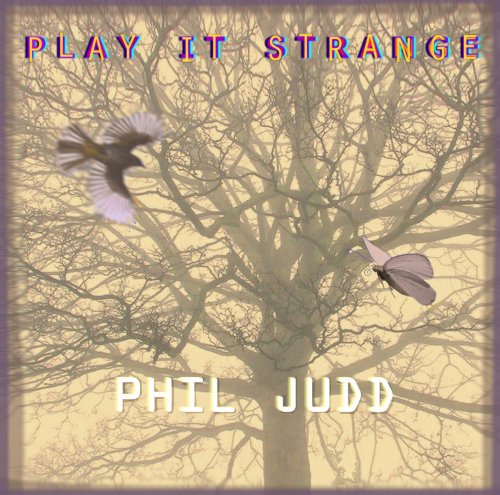
Judd’s later efforts seem more medicated and strained, again portraying not embodying his edge of insanity. His group Schnell Fenster’s “Sleeping Mountain” is a great song, hinting at pent-up, uncontrollable energy, but it is his resurrection of the long ago demo’d “Play It Strange” on his 2014 album of the same name, that really captures that Mental Notes era. You can listen to, and purchase, that touching, masterful song here. It gives me great comfort in this time when I seem to play it strange down my own path, while the world goes its own strange way.

a0932763007_10

Cover of the album “Play It Strange” by Phil Judd. ©2014, Phil Judd and Bandcamp

Read Full Post »

Unexpected Shades

On the strength of a scratchy 45 of mine, “Midnight Blue,” I’ve been drawn into the world of Melissa Manchester, yes, the height of 1970s riding-around-with-my-mom-in-the-car radio. I’ve learned a lot. Manchester co-wrote “Midnight Blue” and “Whenever I Call You Friend,” and long before the 1980s brought “You Should Hear How She Talks About You” and other minor chestnuts, was recording albums in classic singer-songwriter style–Home to Myself, Bright Eyes, Melissa, Help Is on the Way. She not only a singing, but playing piano, writing many or most of the songs on her albums, often with long-term writing partner Carole Bayer Sager.

I picked up a two-CD, four-album set featuring these albums and started playing it in the background of my typing doings, noticing when “Midnight Blue” came on, when she did a good cover of “Dirty Work,” and occasionally had my ear perked with other pieces of songs. I started hearing shades of piano I never expected, minor keys, quiet playing in the dark, something as set in another world, or at least a rare home of her own, her quiet corner of NYC.  “Easy,” “Jenny,” “Bright Eyes,” “I Don’t Want to Hear It Anymore.” These songs caught me, and reminded me of one of my favorite albums of all time.

There are only a few albums that have instantly made me feel I had entered another dimension, another world, another landscape to explore. These three always spring to mind: 1977 by Talking Heads, Murmur by R.E.M., Mental Notes by Split Enz. This last came out in 1975, just after the first two Manchester albums I listed, and the same year as the third. Mental Notes has elements of early Genesis, but it really is a thing unto itself. And I guess now I can add there’s a bit of Melissa Manchester, those moments of quiet piano. If you listen to the stylings of Eddie Rayner and Tim Finn on “Time for a Change,” you’ll hear a touch and more of what she was playing. In the quiet corners of one the best albums ever recorded–the latter halves of “Stranger than Fiction” and “Under the Wheel,” and times when they segue into rollicking beats–you might hear her.

What would it be like if Bronx-born Melissa had been the Split Enz keyboardist? I discovered the great Akiko Yano in a mental/Wikipedia exercise, starting with a thought and looking for a pianist to fill the spot. I am glad I stumbled into Melissa Manchester in a similar way, albeit backwards–starting with a hit song and surprisingly finding a corner of her musicianship I’d never expected.

Read Full Post »

The time has come again.

I’ve been watching lots of Women’s World Cup soccer action, and figure it is about time. Watching these women play with gusto and expertise hearkens me back to my days playing the same sport, and subsequent efforts in tennis, softball, basketball, and epic pick-up football struggles with friends–but those days for me are no more, even were I to pick sports back up. I have taken a different path, a more bookish one, and I figure I ought to make the most of it rather than look wistfully at other options. So, days of sucking orange slices with comrades in arms may be gone, but we press on.

Lavelle-World-Cup-750x500

Lefties unite! Rose Lavelle left foots it.

A lot of my previous writing was as assigned, always an easy task when given limits, or “because a fire was in my head.” Thanks to these and some other endeavors (see About for a few) I’ve scraped together something of a corpus. As years and un-begun projects stack up, though, it is a good time to start in greater earnest, perhaps with a bit of refinement-through-age helping me, although this is hardly the brevity I was hoping for when I began typing this morning.

This blog is about music, and more. Art exhibits I visit, philosophic and political ideas that rear their heads, favorite works of literature, historical oddities, movies, aesthetic miscellanies, etc. And this all started and starts with The Sugarcubes. A decade or more ago, a workplace intern told me she was a fan of Björk (Guðmundsdóttir), renowned Icelandic solo singer, and presented me with a collection of her best work. When I mentioned Björk’s early group of some distinction, The Sugarcubes, she hadn’t heard of them. Of course, this saddened me.

Now, quite possibly a generation removed from those who have any acquaintance with Björk, let alone The Sugarcubes, I figure one thing I can share for any who are to read is my experience with music, something I have delved into with natural, unthinking avidity for my whole life.

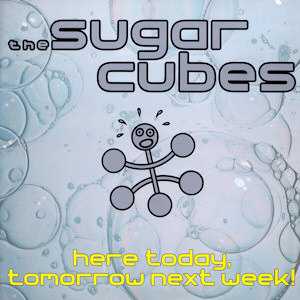
But the idea for this blog starts with The Sugarcubes, specifically their second album, Here Today, Tomorrow Next Week! This album is and was unsung, considered a disappointment at the time among the critics and my friends, my alternative set of friends as opposed to the rap one; another in the catalogue (yes, we can still spell it this way) of supposedly cursed debut follow-ups.

Here_Today,_Tomorrow_Next_Week!

©1989, Elektra Records

I didn’t know the release date, which turns out to be September 1989. What a wonderful date! My birthday month and the start of my college career! I was off in a place away from my altie music friends, but saw them plenty during Christmas break and summers, and we even exchanged written and posted letters often discussing these very things, music releases that is! So, with those days in mind, I will see what I can make of this blog today, tomorrow, next week.

Read Full Post »

« Newer Posts