I sometimes stop to think how amazing it is that the words of Julius Caesar have survived history, that we can read his descriptions of his notorious and celebrated maneuvers in the Gallic frontiers and Roman power politics. Leonardo’s notebooks, a biography of a Byzantine emperor written by his daughter, the revelatory Records Written In Silence of a Korean noblewoman of the eighteenth and nineteenth centuries, these have survived for us to relish as experiences of past thought and deed.
Listening to Mental Notes, the first album by Split Enz, it occurred to me that we might be listening Phil Judd’s experiences of bipolar disorder chiseled into a record groove. Judd was one of two lead songwriters and lyricists for the band at the time, the other being Tim Finn. The whole album from side one’s “Walking Down A Road,” “Under The Wheel,” “So Long For Now,” to side two’s “Stranger Than Fiction,” “Titus,” and “Spellbound,” to the last incessantly repeating groove of “Mental Notes” ringing in our ears and Judd’s head—suggest this notion. Maybe it’s true, maybe not, but it’s an affecting lens through which to experience the album and the band’s early history, with guitarist Wally Wilkinson leaving the group due to agoraphobia, and Judd apparently so stressed from touring and the other travails of band membership that he started tearing his hair out—hence his baldness in the masterpiece “Sweet Dreams” video.
I’m not sure why this never occurred to me before. Look at their other early album names: Frenzy, Second Thoughts, Dizrythmia. All were recorded while Judd was with the band, or his influence still strongly felt, before Neil Finn (hard to imagine anyone saner) came to dominate the songwriting and image. Noel Crombie’s harlequinesque stagecraft always suggested clownishness, a fun, safe representation of insanity. But what it really shows is a jubilant, lip-smacking sugar pill of mental illness—Judd’s defiant lost-one’s-mindedness recorded on record and film.
And some of Split Enz’s earlier songs reveal the same: “For You” and “No Bother To Me,” which has seldom left my head these past couple of weeks:
My eyes are red and my head’s in pain
It won’t hurt me to say what I mean
My throat is blistered but my hands are clean
I’d love you still but I’m not able
They won’t catch me if I can help it
Just hold me down if I have a fit
Say that I’ll be normal some day
Now they laugh and teach me how to pray
By good fortune, we have this video of the above song, preceded by my favorite of their performances on their catchiest of tunes, “Maybe.” The stage performance is as demented as they come; the transcription is muddled, like a filmstrip from its era, the ones we’d see in elementary school. What better luck in capturing the band’s depiction of mental illness?
The spirit lived on, notionally at least. Tim Finn was the more happy-go-lucky one, with the sweeter voice, as opposed to Judd’s bleating, which he was forced to re-record on at least one occasion (viz., the two versions of “Titus”). In “Without a Doubt,” “Haul Away,” and even the disturbing “Charlie,” Finn is depicting an approximation, an outside-looking-in, decorous view of depression, melancholy, violence, madness. The spirit remains to some extent, the viscera have fled.
Judd’s later efforts seem more medicated and strained, again portraying not embodying his edge of insanity. His group Schnell Fenster’s “Sleeping Mountain” is a great song, hinting at pent-up, uncontrollable energy, but it is his resurrection of the long ago demo’d “Play It Strange” on his 2014 album of the same name, that really captures that Mental Notes era. You can listen to, and purchase, that touching, masterful song here. It gives me great comfort in this time when I seem to play it strange down my own path, while the world goes its own strange way.
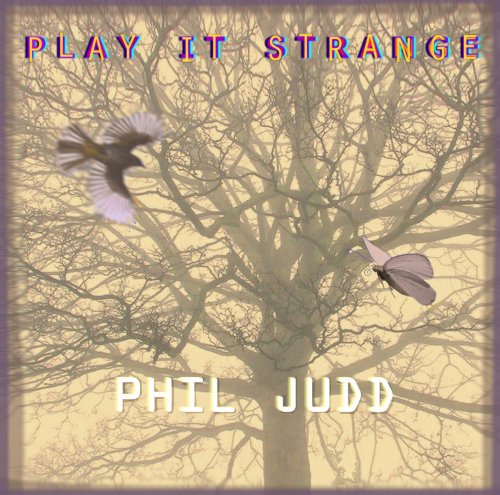
Cover of the album “Play It Strange” by Phil Judd. ©2014, Phil Judd and Bandcamp


 stevesunusual...music and more