Feeds:
Posts
Comments

Ephemerality

This cold weather carries so many old people away.

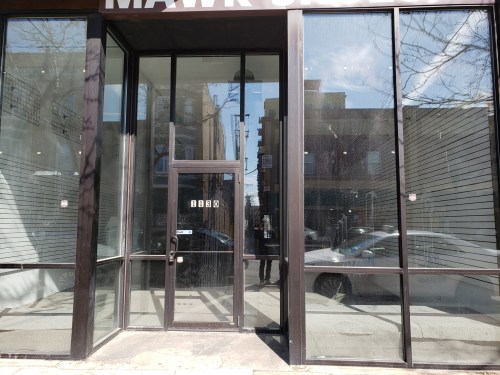
That’s the first line of a poem called “For Nineteenth-Century Burials” by John Betjeman. But it can just easily apply to the centuries I’ve lived in. The line pops into my head now and then, and did so the other day as I passed by the new/old campaign office of Michael Bloomberg, which popped up one day a couple of weeks ago and almost immediately shut down the day after Super Tuesday. This is all that is left:

20200308_115804_resized

Michael Bloomberg Chicago HQ, the day after.

One day, the same will happen to the Bernie Sanders office, then the Joe Biden one, and so on and so on. In these days of coronavirus, and the usual violence and accidents of various stripes, it is hard not to think of death, here today gone tomorrow, as opposed to the more optimistic, but still earth-bound Here Today, Tomorrow Next Week! referred to a few posts ago.

Examining letters from my grandpa’s brother, writing jovially about seeing slightly old movies in the Pacific Theater, out of harm’s way, until he wasn’t and was killed late in WWII gives me a similar feeling.

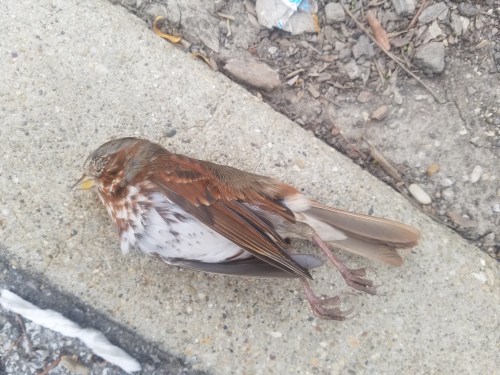
If one thinks about it, death surrounds us daily, there is always something, animate or inanimate, meeting its maker as we walk down the street. And if we felt it, as one can if they focus on certain Instagram pages about, say, farm animals, many of us would not be able to carry on. Anyone who helps animals in trouble feels this deeply sometimes. I rescue birds when they migrate through our hazard-filled big city, and the speed and wantonness of death can be astonishing.


38009165746_711902e8be_k

A beautiful Fox Sparrow beyond rescue.

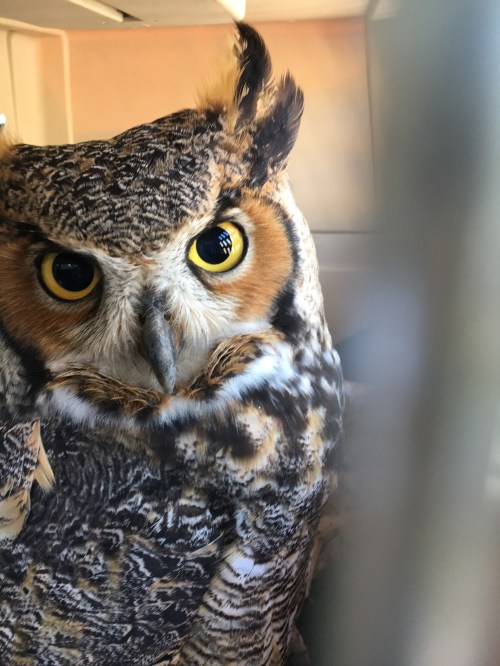
Look at this beautiful Great-horned Owl:

49265477076_e5b2f29644_o

©2019, Nora Moore Lloyd (nativepics.org)

Sadly, it didn’t live even for a day after this photo was taken due to an injury it had already sustained. Such beauty and vibrancy, gone.

I guess the clichés about carpe diem carry weight. It seems right to do what you love and spend your time with those you love. Realize that everyone is in the same boat, every living thing on this planet.

These cold breezes / Carry the bells away on the air, / Catching new grave flowers into their hair,  / Beating the chapel of red-coloured glass.

I sometimes stop to think how amazing it is that the words of Julius Caesar have survived history, that we can read his descriptions of his notorious and celebrated maneuvers in the Gallic frontiers and Roman power politics. Leonardo’s notebooks, a biography of a Byzantine emperor written by his daughter, the revelatory Records Written In Silence of a Korean noblewoman of the eighteenth and nineteenth centuries, these have survived for us to relish as experiences of past thought and deed.

Listening to Mental Notes, the first album by Split Enz, it occurred to me that we might be listening Phil Judd’s experiences of bipolar disorder chiseled into a record groove. Judd was one of two lead songwriters and lyricists for the band at the time, the other being Tim Finn. The whole album from side one’s “Walking Down A Road,” “Under The Wheel,” “So Long For Now,” to side two’s “Stranger Than Fiction,” “Titus,” and “Spellbound,” to the last incessantly repeating groove of “Mental Notes” ringing in our ears and Judd’s head—suggest this notion. Maybe it’s true, maybe not, but it’s an affecting lens through which to experience the album and the band’s early history, with guitarist Wally Wilkinson leaving the group due to agoraphobia, and Judd apparently so stressed from touring and the other travails of band membership that he started tearing his hair out—hence his baldness in the masterpiece “Sweet Dreams” video.

I’m not sure why this never occurred to me before. Look at their other early album names: Frenzy, Second Thoughts, Dizrythmia. All were recorded while Judd was with the band, or his influence still strongly felt, before Neil Finn (hard to imagine anyone saner) came to dominate the songwriting and image. Noel Crombie’s harlequinesque stagecraft always suggested clownishness, a fun, safe representation of insanity. But what it really shows is a jubilant, lip-smacking sugar pill of mental illness—Judd’s defiant lost-one’s-mindedness recorded on record and film.

And some of Split Enz’s earlier songs reveal the same: “For You” and “No Bother To Me,” which has seldom left my head these past couple of weeks:

It’s no bother for me to beg, I was sane
My eyes are red and my head’s in pain
It won’t hurt me to say what I mean
My throat is blistered but my hands are clean
And I’m just your long lost love and
I’d love you still but I’m not able
They won’t catch me if I can help it
Just hold me down if I have a fit
And I think I’ll be alright now
Say that I’ll be normal some day
Now they laugh and teach me how to pray


By good fortune, we have this video of the above song, preceded by my favorite of their performances on their catchiest of tunes, “Maybe.” The stage performance is as demented as they come; the transcription is muddled, like a filmstrip from its era, the ones we’d see in elementary school. What better luck in capturing the band’s depiction of mental illness?

The spirit lived on, notionally at least. Tim Finn was the more happy-go-lucky one, with the sweeter voice, as opposed to Judd’s bleating, which he was forced to re-record on at least one occasion (viz., the two versions of “Titus”). In “Without a Doubt,” “Haul Away,” and even the disturbing “Charlie,” Finn is depicting an approximation, an outside-looking-in, decorous view of depression, melancholy, violence, madness. The spirit remains to some extent, the viscera have fled.

Judd’s later efforts seem more medicated and strained, again portraying not embodying his edge of insanity. His group Schnell Fenster’s “Sleeping Mountain” is a great song, hinting at pent-up, uncontrollable energy, but it is his resurrection of the long ago demo’d “Play It Strange” on his 2014 album of the same name, that really captures that Mental Notes era. You can listen to, and purchase, that touching, masterful song here. It gives me great comfort in this time when I seem to play it strange down my own path, while the world goes its own strange way.

a0932763007_10

Cover of the album “Play It Strange” by Phil Judd. ©2014, Phil Judd and Bandcamp

Hurry and Delay

Time is the trickiest business for us humans and as time presses on us and passes us by, we sometimes learn a thing or two about it. A decade or so ago, I garnered a ticket for turning right somewhere in Chicago where it was perfectly safe to do so, although an unnoticed sign prohibited it. After shelling out and a week of online traffic school, I learned a thing or two and was almost grateful for the experience. Hurrying to a destination rarely shaves off much time, and the times it causes an accident or ticket more than compensate for time saved while weaving in an out of traffic, treating each trip like a race between unspecified opponents on an unspecified course, or in tailgating or passing people only to cut them off or wind up right in front of them at a red light.

Sitting back a bit and watching the world unfold is more than worth it, in the end, and besides I can listen to (and sing) good music while driving, so what’s the rush? Haste does make waste, I constantly notice as I try to maneuver something in my apartment only to drop it. I have never been one to hurry. I was not especially eager to grow up or graduate from class to class. I spent an extra half-year, at least, at grad school phase two because I was comfortably working half the week, taking a small class load, and writing in my spare time. Never in a rush to marry for its own sake. When confronted with an almost incalculable span of time in fifth grade–what will your life be like in the year 2000–I produced something akin to normality, having a wife and kids and such, without much thought and certainly no plan or overwhelming aspiration. It just seemed how things would unfold, and that was fine.

Now, life sans hurry can lead to accomplishing nothing sometimes, especially when opportunities are not seized. On the other hand, life can be savored by looking around one’s self as time slips by. Delay is no friend either, and I have seen it these days with family, resistance to change, to facing reality, taken to dangerous levels. There is plenty of life left, and curtailing an activity here and there due to age or inability or what have you, well, there is no harm in that, and in fact it can be life-saving and life-improving.

My plan is to keep doing things, keeping busy, but not feeling compelled to rush into anything, and trying to better seize a moment when I can. There is value in holding my tongue and not acting, but more and more I note it is best to just say it and get it over with. No one is perfect at this, we are often off, but we can hone our skills as time passes by, however much our capabilities and ambitions may change. What is clear, though, hurry and delay can cause a lot of trouble and art is long.


Hurrian_foundation_document-AO_19937-IMG_3470-gradient

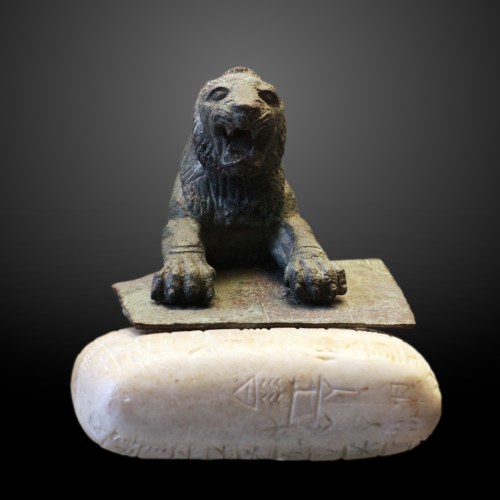
Hurrian “Urkish Lion” and foundation document, Third Millennium BCE

Unexpected Shades

On the strength of a scratchy 45 of mine, “Midnight Blue,” I’ve been drawn into the world of Melissa Manchester, yes, the height of 1970s riding-around-with-my-mom-in-the-car radio. I’ve learned a lot. Manchester co-wrote “Midnight Blue” and “Whenever I Call You Friend,” and long before the 1980s brought “You Should Hear How She Talks About You” and other minor chestnuts, was recording albums in classic singer-songwriter style–Home to Myself, Bright Eyes, Melissa, Help Is on the Way. She not only a singing, but playing piano, writing many or most of the songs on her albums, often with long-term writing partner Carole Bayer Sager.

I picked up a two-CD, four-album set featuring these albums and started playing it in the background of my typing doings, noticing when “Midnight Blue” came on, when she did a good cover of “Dirty Work,” and occasionally had my ear perked with other pieces of songs. I started hearing shades of piano I never expected, minor keys, quiet playing in the dark, something as set in another world, or at least a rare home of her own, her quiet corner of NYC.  “Easy,” “Jenny,” “Bright Eyes,” “I Don’t Want to Hear It Anymore.” These songs caught me, and reminded me of one of my favorite albums of all time.

There are only a few albums that have instantly made me feel I had entered another dimension, another world, another landscape to explore. These three always spring to mind: 1977 by Talking Heads, Murmur by R.E.M., Mental Notes by Split Enz. This last came out in 1975, just after the first two Manchester albums I listed, and the same year as the third. Mental Notes has elements of early Genesis, but it really is a thing unto itself. And I guess now I can add there’s a bit of Melissa Manchester, those moments of quiet piano. If you listen to the stylings of Eddie Rayner and Tim Finn on “Time for a Change,” you’ll hear a touch and more of what she was playing. In the quiet corners of one the best albums ever recorded–the latter halves of “Stranger than Fiction” and “Under the Wheel,” and times when they segue into rollicking beats–you might hear her.

What would it be like if Bronx-born Melissa had been the Split Enz keyboardist? I discovered the great Akiko Yano in a mental/Wikipedia exercise, starting with a thought and looking for a pianist to fill the spot. I am glad I stumbled into Melissa Manchester in a similar way, albeit backwards–starting with a hit song and surprisingly finding a corner of her musicianship I’d never expected.

Delight in blindness.— “My thoughts,” said the wanderer to his shadow, “should show me where I stand; but they should not betray to me where I am going. I love my ignorance of the future and do not wish to perish of impatience and of tasting promised things ahead of time.” (Nietzsche, The Gay Science, 287)

It has been an unusual year or two, and as 2018 turned to 2019, when faced with a choice, I have decided to pare away, to strip down what I was doing to what I, in fact, wanted to do. My conservation work, although tedious in role at times, has been fulfilling and some camaraderie has arisen. Most else has been pretty much nil, but being close to my family and haunts is always satisfying. I rejuvenated a former working passion of mine and it might lead finally to a bit of recompense. If I were not so stubborn, I might have fled this place and find it happier by now, but I am always looking around here, trying to extract blood from a stone, whether it be a bird in a forest I’ve known my whole life, or finding a way of life here.

There is a tremendous beauty in this falling to nothingness, ignored by the hiring world, not pursuing unrequited friendships, rejuvenating my tasks and goals. Past great loves of mine have finally been let go, and the boxes storing those memories have dwindled to one. I sometimes feel a pang of regret in part of me. I wish what is now behind well. I cannot look back for long, for any longer.

And the past came to me these past couple of years in force. A college reunion in 2018 led to long conversations with people I’d respected then, but didn’t know well at all. On the other hand, a close friend or two from that time is no longer close. A couple of the very few cards I sent out this December to people from that time have gone unanswered.

And in 2019, high school took its turn, an even more obscure reunion for me, who had barely scratched my brain to think of that time in a decade or two. The nooks of the school were familiar again as we toured, and I found I had a single happy flash of recollection about almost everyone I met. It is benign, almost happy to meet people again who you barely knew then. The couple of formerly close friends I spent time with were fun to see as well. The others were small things: “I remember her, overhearing her commenting that she loved saxophone music as the girl behind me kept staring at and seemingly trying to steal my eyelashes.” “This woman wrote a different binomial equation in every yearbook she signed.” “This person lived so close to me, but being a block out of the range of where I ran around with my friends, I never got to know her.” Such happenstance smoothed over with age.

Someone I thought I might wish to meet again was at a concert. I had not imagined this context, and she with her husband, and it was pure revulsion after a moment of initial stun. In another context, maybe not revulsion, but it’s done and now revulsion is the default and so it will remain. I wash my hands of that wish.

I found someone recently who I had searched for off and on for years, ever since she’d said goodbye at the end of a school year way back then. No reply; could she forget me?. Or was it an odd juxtaposition for her, not worth it? I can let these things go now; I have tried, and the past is not much for our present⁠—it truly does end.

The world is indifferent, I know this, but experiencing it with such force in the world of standard human endeavor of these days⁠—finding work, finding love⁠—this indifference I had not quite experienced in the same way, with the same endurance, although I have found I can endure it pretty well. I refuse to refuse myself, to contort myself, to comport myself. And I am the better for it. After nothing most likely will come something.

And again, there is the delight in nothing, lost but still possibly on the verge of being found, but not relying on it, not trying to pave deliberate some way for it. Tonight, the delight of the epiphany is here with us now; my world has fallen to nothing; I am saved from strife. “Then the tempo of life slows down and becomes thick like honeyeven to the point of long fermata, of the faith in long fermata.” (Niet., 376) The earlier holidays’ powdered-sugared Pandoro is now parti-colored Rosca de Reyes.

I imagine most would say I have held the fermata too long, and yes I think of my former band teachers. Say it has been too long a pause in my indecision, confusion, stubborn refusal, seeking self again. I can let this long, sweet pause go like I have much else. Now it is time for achievement, compromise to scrape together a living and maybe loving. I look at the pair of Stiphodon gobies that have the 29-gallon fish tank beside me all to themselves and think of my being alone, and of the old line of mine in my head: “I await one ere I seal my tomb.” It holds true, and though it was written with a wife in mind, it can also apply to paying work. But even now, these do not compare to the satisfaction in this nothing, knowing myself as I stand. Now it is time, with minimal compromise, and as the celebrated musical advised, to Follow Thru and fulfill what I am.

follow-thru-nancy-carroll

Nancy Carroll in Follow Thru ©1930, Paramount Pictures

The time has come again.

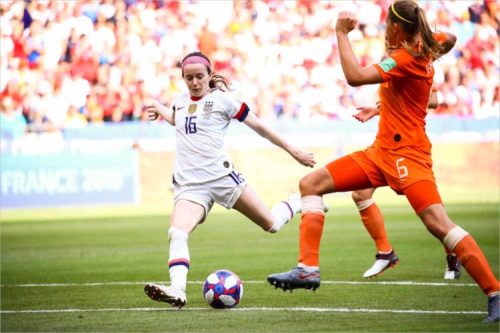
I’ve been watching lots of Women’s World Cup soccer action, and figure it is about time. Watching these women play with gusto and expertise hearkens me back to my days playing the same sport, and subsequent efforts in tennis, softball, basketball, and epic pick-up football struggles with friends–but those days for me are no more, even were I to pick sports back up. I have taken a different path, a more bookish one, and I figure I ought to make the most of it rather than look wistfully at other options. So, days of sucking orange slices with comrades in arms may be gone, but we press on.

Lavelle-World-Cup-750x500

Lefties unite! Rose Lavelle left foots it.

A lot of my previous writing was as assigned, always an easy task when given limits, or “because a fire was in my head.” Thanks to these and some other endeavors (see About for a few) I’ve scraped together something of a corpus. As years and un-begun projects stack up, though, it is a good time to start in greater earnest, perhaps with a bit of refinement-through-age helping me, although this is hardly the brevity I was hoping for when I began typing this morning.

This blog is about music, and more. Art exhibits I visit, philosophic and political ideas that rear their heads, favorite works of literature, historical oddities, movies, aesthetic miscellanies, etc. And this all started and starts with The Sugarcubes. A decade or more ago, a workplace intern told me she was a fan of Björk (Guðmundsdóttir), renowned Icelandic solo singer, and presented me with a collection of her best work. When I mentioned Björk’s early group of some distinction, The Sugarcubes, she hadn’t heard of them. Of course, this saddened me.

Now, quite possibly a generation removed from those who have any acquaintance with Björk, let alone The Sugarcubes, I figure one thing I can share for any who are to read is my experience with music, something I have delved into with natural, unthinking avidity for my whole life.

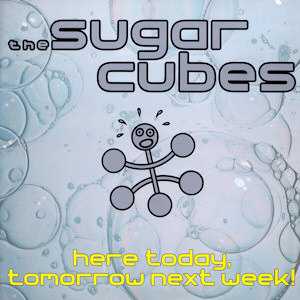
But the idea for this blog starts with The Sugarcubes, specifically their second album, Here Today, Tomorrow Next Week! This album is and was unsung, considered a disappointment at the time among the critics and my friends, my alternative set of friends as opposed to the rap one; another in the catalogue (yes, we can still spell it this way) of supposedly cursed debut follow-ups.

Here_Today,_Tomorrow_Next_Week!

©1989, Elektra Records

I didn’t know the release date, which turns out to be September 1989. What a wonderful date! My birthday month and the start of my college career! I was off in a place away from my altie music friends, but saw them plenty during Christmas break and summers, and we even exchanged written and posted letters often discussing these very things, music releases that is! So, with those days in mind, I will see what I can make of this blog today, tomorrow, next week.

Hello world!

Welcome to WordPress.com. This is your first post. Edit or delete it and start blogging!