Feeds:
Posts
Comments

Archive for the ‘Non-Music’ Category

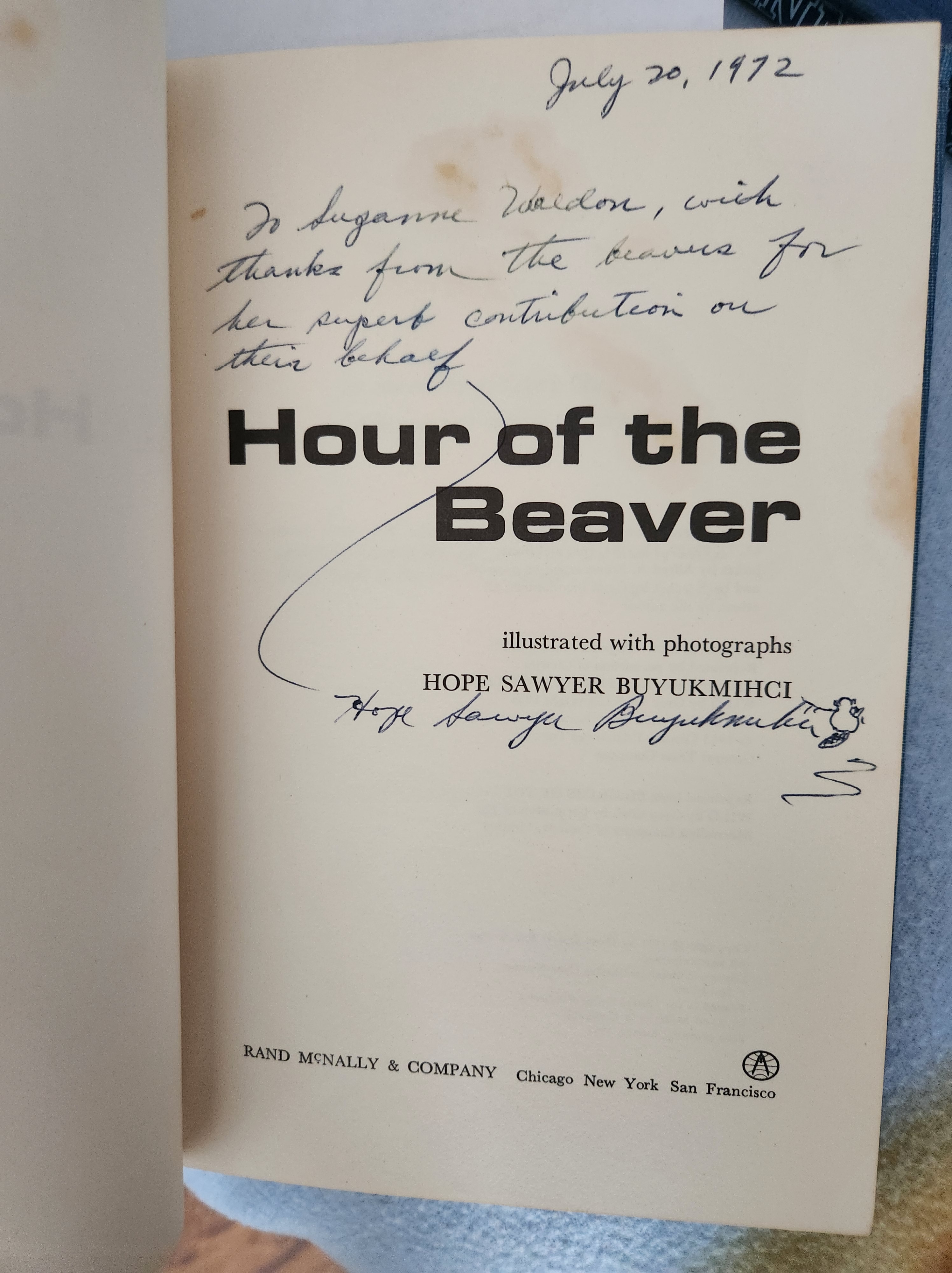
Reflecting on the two lovely blue-covered books I just read, I’m struck by two things, one seemingly superficial, one psychological, both important to me. The first book is “Hour of the Beaver” by Hope Sawyer Buyukmihci, from the early 1970s. The other is from the early 1980s, “Tennis My Way” by Martina Navratilova. That decade span is a nice envelope around my childhood.

The first thing is just the sheer quality of the books from back then. There are many better examples, but the beauty and durability of the hardcovers from that era is comforting and speaks to a time when publishers could afford to “care.” The textures of the covers, the quality of the paper, the fonts, the white space on the pages, the generous illustrations, all speak to me and reflect the value of the book’s contents. (Dustjackets are shown in the second group of photos.)
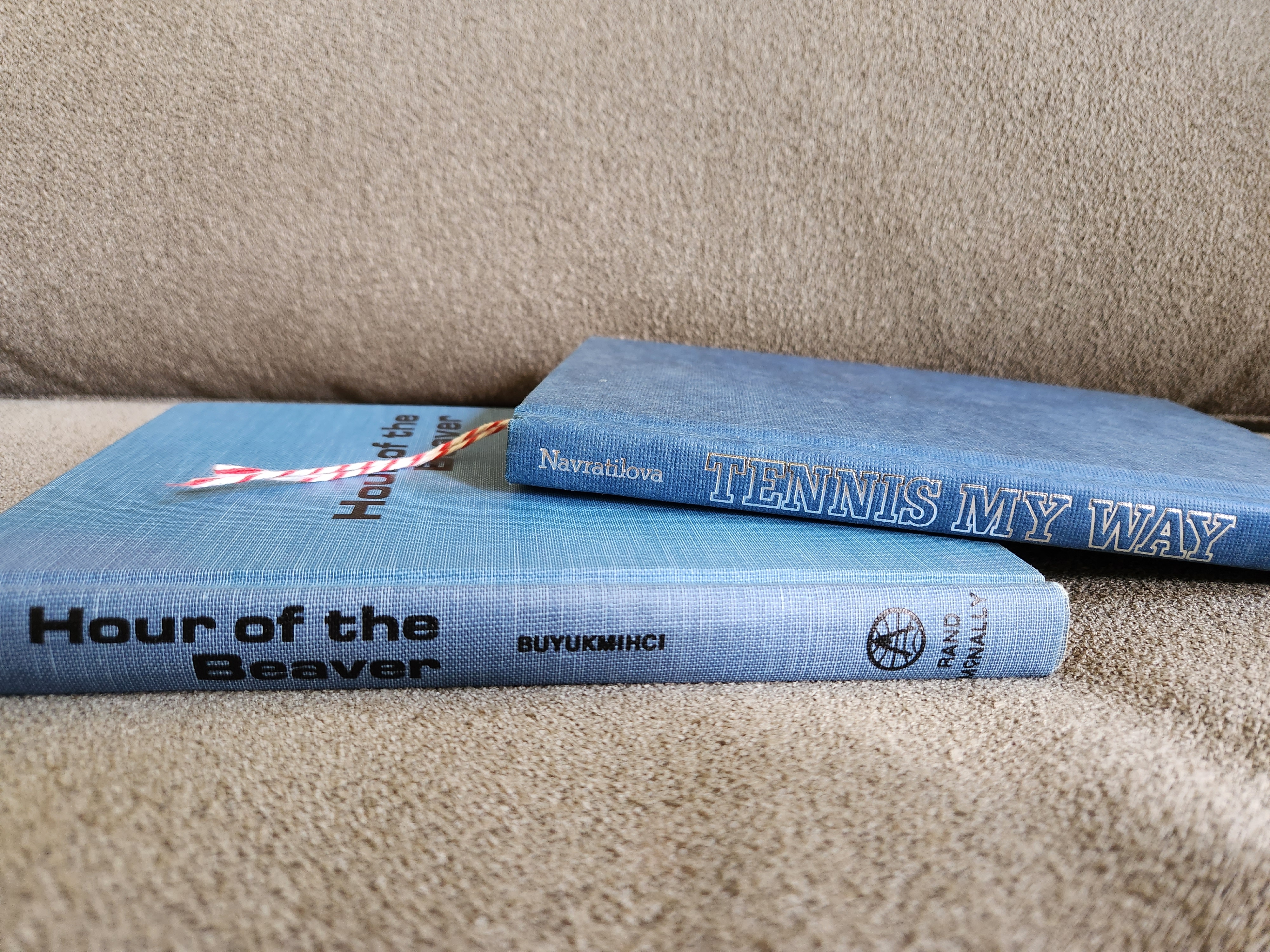
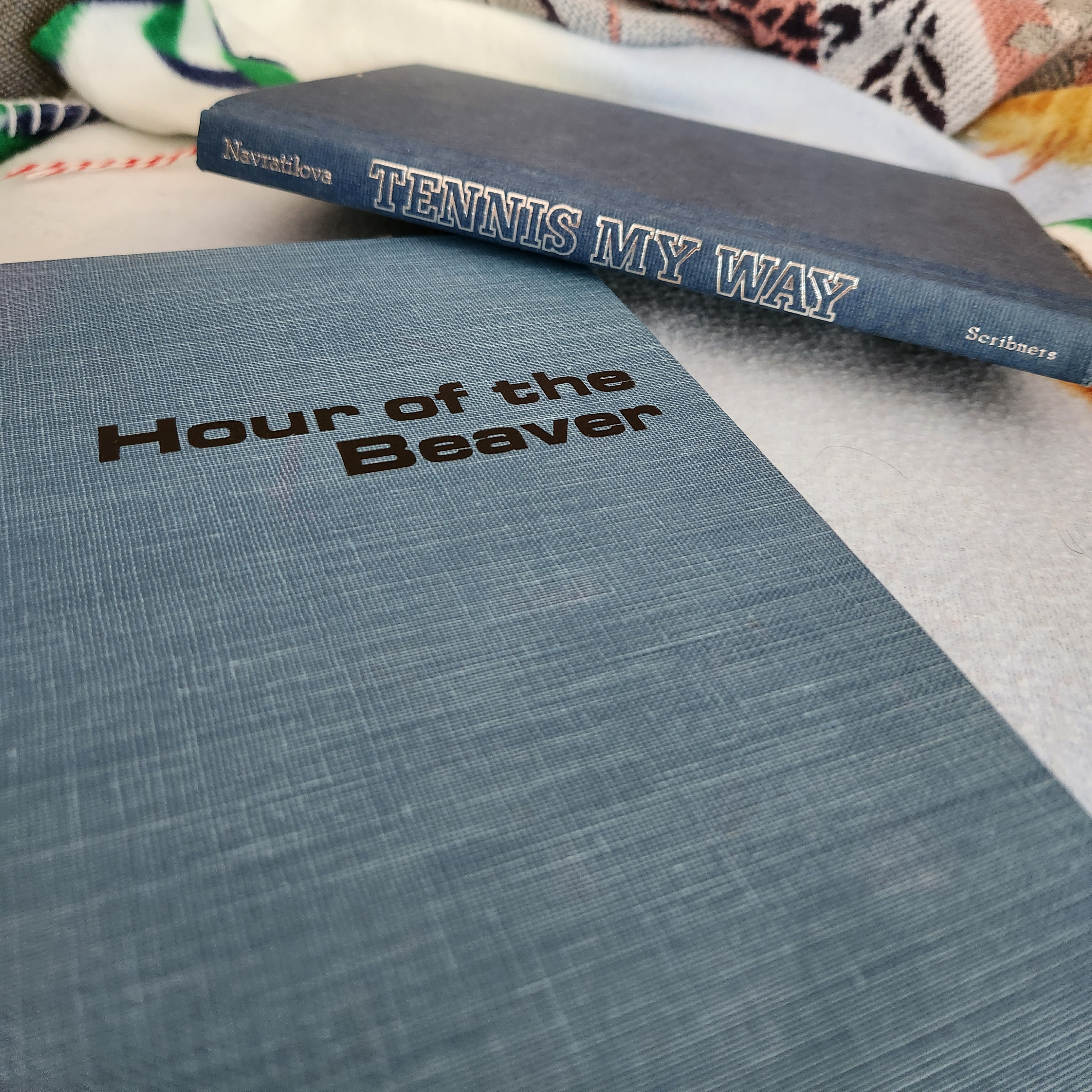
The second thing is just how much we are made in our formative years. Luckily, in my case, the person who was developing in this time—and continues to develop, I hope—was influenced by enlightened people like these two authors. “Hour of the Beaver” is a passionate argument for conservation and seeing other creatures’ point of view, with simple, eloquent seeds of the arguments against hunting and converting wild lands into human ones. Martina’s book is a no-nonsense guide to tennis, shedding light on one of its greatest player’s opinions and mindsets, with lessons that can be applied by anyone who wants to apply themselves to any pursuit!

As much as we’ve learned and been tidal-waved by data and developments since these books were written, the fundamentals these authors share are touchingly written and are good reminders that there were indeed people in the past who had ideas that are point the forward to this day. In fact, Navratilova and Buyukmihci build upon foundations laid long before they took to the pen. They certainly seem to influence me more strongly than many a contemporary figure. Why is this? The aesthetic or style of their message? Their roles as “elders” in my formative years? It’s hard to say, but I’m happy they’re (still) around.
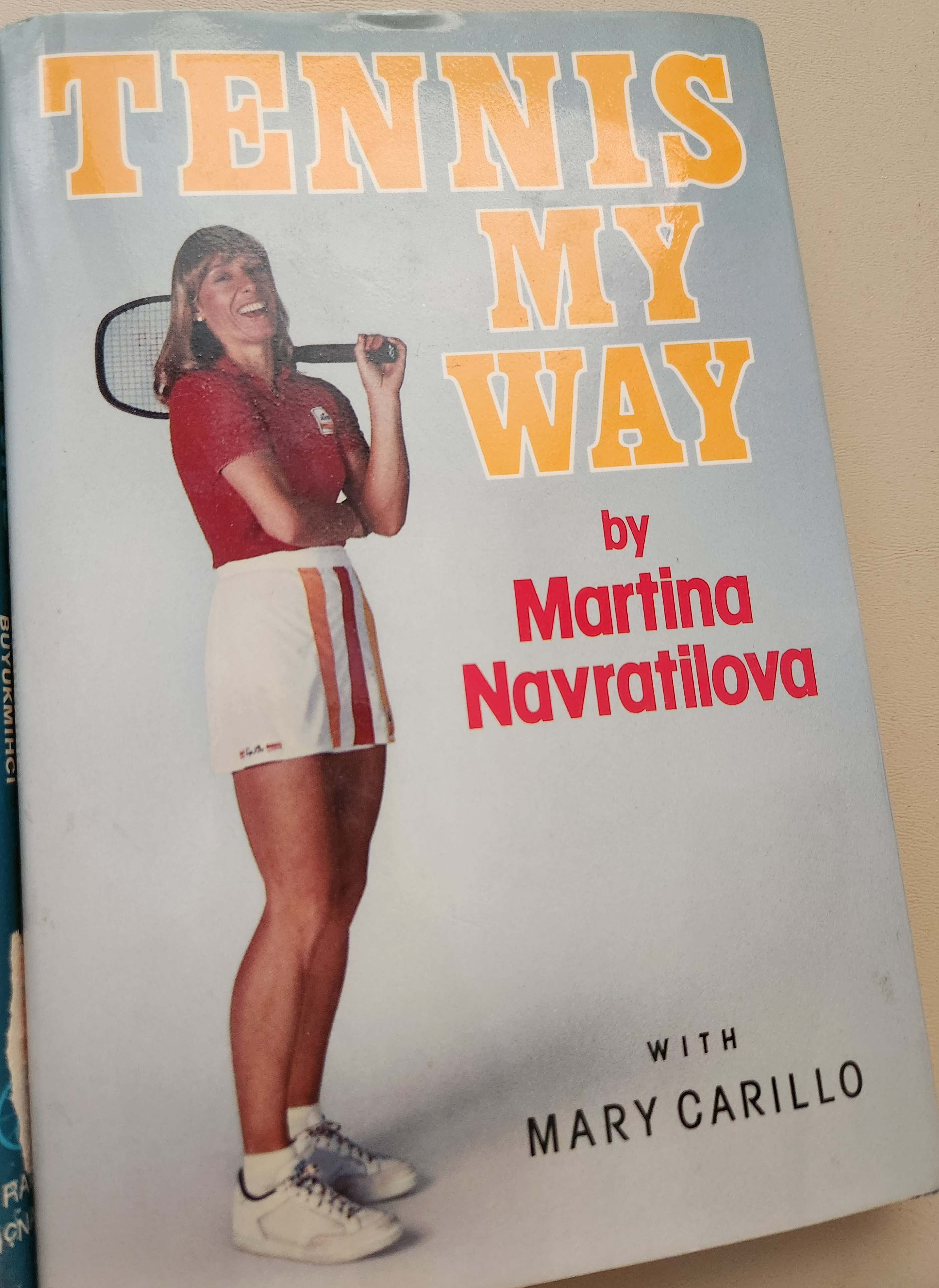
Incidentally, Martina’s autobiography (also written in the early ’80s) is also well worth reading, a real testament to her directness through her detailed story of emerging from the Iron Curtain and finding her way in the world.

You can find mini-reviews of these books, and many more, on my Amazon profile page. Here’s the link to them. Keep an eye on my conservation thoughts here, at squirreloftheweek.org.
Read Full Post »

In golden days, I used to read a little blue book of Matthew Arnold essays that my mom used in college. I sadly no longer have that little pocket book and should probably re-read its contents, but the essay titled Culture and Anarchy is what I’m thinking of as I type today. I haven’t thought about it in years.

Its most celebrated idea, “Sweetness and light” is a phrase that’s lost its cultural power. But for Arnold, the phrase as a powerful antidote to contemporary over-utilitarian, staid practices and thinking. For him, “sweetness is beauty, and light is intelligence” and is part and parcel of his counsel to pursue and implement “the best that has been thought and said.” A kind of thing we might call a “canon” of knowledge to be consulted in time of need or just as a part of wholesome daily life.

Arnold uses the past tense, “the best that has been thought and said,” but I don’t see his advice as stodgy or antiquarian: he had his eye on reform and truth. Besides, once something is thought AND communicated, it’s done and technically in the past, even if it’s a brand new utterance. I held this ideal as I read my way through my 20s and 30s, confident in my reading choices, and confident that the past held many answers for today. The sheer weight of all that’s gone before us surely has generated just about everything we need to consider as we move forward, so I thought and still mostly do—we were and remain humans. And with solutions to problems and ideas being generated all the time, there’s always a fresh “recent past” to comb through.

For society in general, though, is such a canon a blind tyranny, a crude “survival of the fittest”? There’s something to be said for a society being held closer-knit through a common fund of knowledge, though it would need to quite varied to keep all perspectives and experiences in view. But there’s little need to worry, we never did have a common canon and never will. And the world seemingly only grows more multifarious, with more people, more cultures, and more avenues of communication to reckon with. On the other hand, we are also becoming more homogenized by all of this global communication and product-buying; we don’t want to become trapped in those limits. Still, ideas do eventually come to fruition and the best problem-solvers seek far and wide, and dig deep within, for the best of them.

Do I still believe in a personal canon, a group of best and brightest? (A more “Herodotean/Whiteheadean” attitude might say that “the best” is ever-changing even for an individual person, proceeding with time and place and context and company and more figuring into it.) I thought about compiling my canon of sound wisdom and beautiful strains of poetry and prose into a book, but it would be a never-ending compilation, for certain.

I’m still confident in my reading choices, although I have a nagging feeling I’m often putting off the better things to read while sweeping up bits and pieces and leftovers, just so I have them settled before moving forward. That’s something I need to fix.

And there’s my ephemerality on this planet to consider. Is there ever a time to sit back and be refreshed by the best you’ve encountered, to abandon the spirit of outward exploration? I could endlessly revisit my favorite authors or times in history or places on this planet; I could endlessly mine the various Impressionists, for example, finding variations on the theme the more I explore, but still remain inward in that era. Or I could branch into something else that’s always caught my eye, just not as strongly—Hindu or Sumerian art, for example.

Some say highest wisdom is in focusing on a particular—a Napoleonic history enthusiast once said he focused on the era and all its goings-on to feel like he really understood it. Others might see a broad mind always exploring and digging and dancing around as the wiser. The answer for me, a fundamentally non-specialist person, remains a little of both—I will continue to spread out where my mind or necessity beckons, and also sometimes revisit old favorites, either to recapture an old, wonderful experience or in hopes of finding something even better than I did before. I haven’t felt the urge to read Matthew Arnold in decades, but maybe I’ll give him a look soon, acknowledging how his ideas are part of me, and maybe to find something new to grow on.

(more…)

Read Full Post »

Just a few days ago, it was the 149th anniversary of first impressionist exhibition, held at 35 Boulevard des Capucines in Paris from April 15 to May 15, 1874, doors open 10 am – 6 pm, 8 pm – 10 pm. This little fact led me down a blooming spring path of reading up on the event and the subsequent seven exhibitions, the last of which was in 1886. All in all, the recurrence of these exhibitions was amazing, especially given the number of artist egos and practicalities (such as money) involved.

I began with this excellent Artchive summation and wound up reading all of the summaries from Impressionist Art.com, which covered seven of the eight with a wealth of images, facts, plus a few typos and opinions (e.g., Caillebotte was handsome), and then the quick summary from ThoughtCo.

These artists, from Morisot and Monet to Degas and Cezanne, and the rest of the lot (e.g., Marie Bracquemond, and paternal Manet hovering in the background) are some of my very favorites, and the world they inhabited with its art dealers and crowds, internal and external politics, and witty prose reactions, is, in a word, rich. And obscurities abound, such as the notoriety of Jean-François Raffaëlli, who I knew only from one painting in one of the Art Institute’s 19th-century galleries.

With all I learned, the most interesting must be that in some instances the artists chose how to display their pictures contrary to academic ways (no surprise there, I guess, since this is what the exhibition was all about). Pissarro’s and Cassatt’s frames were two discussed, along with the ways some artists were given their own galleries and some featured in the front of the exhibition, some (the more challenging ones) at the back.

This led me to this little illuminating article from Australia’s AnArt4Life blog, highlighting both the simple colored frames used, the color of the paint on the walls behind the paintings, as well as how the paintings were displayed to as to be appreciated much more easily and individually. It just so happens this article’s writers are in Melbourne, Victoria, where I once happened to visit some of their museum galleries with a person who had a knack for pointing out how the frames of the paintings affected and enhanced the experience.

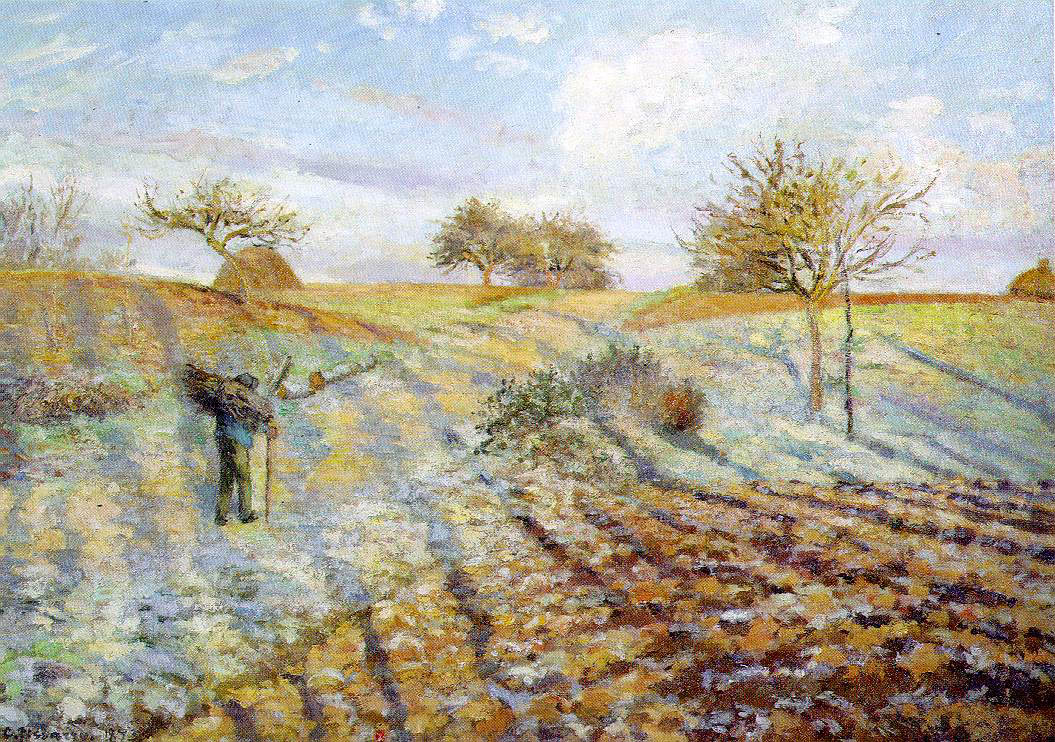
Well, there you have it, a dully prosaic write-up on one of the most lyrical times in art history. I hope you find something to enjoy in it, despite the stilts. I’ll leave with a couple images from Pissarro, whose role (and work) I came to appreciate more thanks to this exercise. I am enjoying imagining how we would have preferred to display these: venue, wall, frame, and all.

Gelée blanche (Hoar Frost / White Frost) by Camille Pissarro, 1873. Displayed at the First Impressionist Exhibition. Source: Wikimedia Commons.
Les châtaigniers à Osny (The Chestnut Trees at Osny) by Camille Pissarro, 1873. Also displayed at the 1874 exhibition. Source: Wikimedia Commons.

Read Full Post »

As much as I’d like to use a Greek “k” when spelling disc, I’ll go with a standard that’s been around for decades. This British staple is not so well-known here, but it seems about time for me to appear on this radio show where eight tracks are selected, plus a book and luxury item to have at one’s disposal while stranded on a desert island. What are yours?

I came up with my selections off the top of my head after only briefest musing. I wonder how they’ll hold up.

Eight Discs
1 “Swan Lake Suite” by Tchaikovsky. I figured I could be granted this if not the entire opera. Drama, beauty, melody, atmosphere, birds, ballet.

2 “Moonlight Serenade” by Glenn Miller & His Orchestra. I love Big Band vocals, but the beauty of the sound, mood, and feel of my grandparents’ generation makes this the one.

3 “The Rain, The Park & Other Things” by The Cowsills. My favorite of a certain 60s genre and subject matter.

4 “Everybody Is A Star” by Sly & The Family Stone. Captures so much in its brief stay.

5 “Born Under Punches (The Heat Goes On)” by Talking Heads. For certain moods.

6 “There Is A Light That Never Goes Out” by The Smiths.

7 “Streets Of Your Town” by The Go-Betweens. Everything comes together perfectly for a band’s music that is full of associations with many of my favorite people on this planet.

8 “Hurricane” by Natalie Imbruglia. One in my quests for the best of the female voice. A song I didn’t know until recently, so good to have something fresh to get to know on this island. And it might be quite à propos for a desert island regardless.

Many important figures in my life are left out. I did an exercise in picking five songs with some friends years ago, with different tunes, but this is how this one turned out. I’ll share those sometime too.

Book
Contestants are granted a copy of the complete Shakespeare (thank you) and The Bible or other religious tome that suits them (not so keen). I apparently echo Eleanor Bron and others in my selection of Homer’s Iliad in dual language (original and the Richmond Lattimore English translation). Could I put this in the place of The Bible and pick another one?

Luxury Item
Pending. Any suggestions?

Read Full Post »

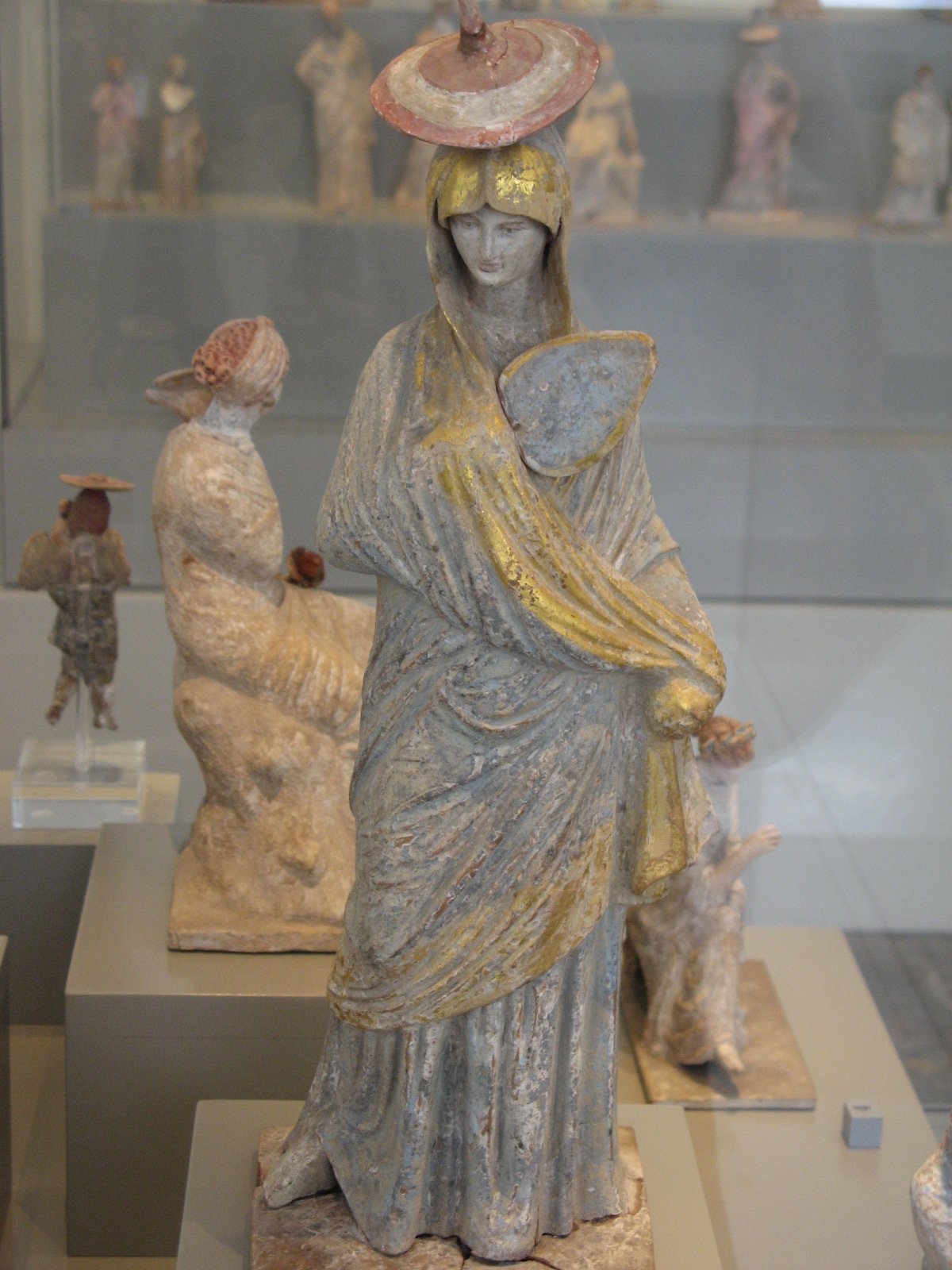
As a former Classics minor and regular museum attendee of minor prestige, I have off-and-on read bits and pieces about how ancient sculpture was anything but monochromatic. If you go to museums these days you start to notice casts of color on ancient objects more than ever before, either because of the buzz about the topic and/or because these pieces are now being showcased.

It’s one of those times of year I wish I was visiting NYC. I spent a lovely summer there long ago and used to visit now and then when I knew people who lived there. Add to that an out-of-the-blue recent conversation I had on a cool New York Public Library exhibition of their collection’s treasures. And then there’s this article from yesterday’s New York Times on the Met’s “Chroma: Ancient Sculpture in Color” show, which features “colorized” versions of ancient sculptures, a public culmination of the studies of the Brinkmanns, a scholarly couple who have been at this for decades. Well, it makes me wish I could hop on planes and trains like I used to, or at least makes me think about studying something interesting like this in depth.

The article covers a lot of ground on ancient polychromy, including a new angle I’d not encountered, namely that by seeing only monochromatic (usually white/whitish marble) human figures in ancient art, our aesthetic and racial views of the world are significantly affected. Check this out for more on that.

Well, that’s plenty of links for you to peruse. But what really intrigued me about the Times article was this:

“However, some historians worry that the Met Museum has elevated the increasingly ubiquitous Brinkmann replicas to an iconic status that is becoming the default representation of ancient polychromy, when the couple’s research is just one among dozens of competing theories. The debate now encompasses more than a disagreement about pigments and scientific method; some academics see the reconstructions as a larger discussion on who gets to define the past.”

As much as I’d like to see the Chroma exhibit in person—and there’s a lot to it, including a fascinating glossary that includes ancient pigments—what I’d really love to see is an exhibit covering these dozens of competing theories, including replicas, succinct write-ups, lectures, evidence, etc. Maybe Chroma will feature some of this—I have not consulted its calendar. I can always resort to books and journals, but what a wonder such an exhibit would be. For that I would hop on the next plane and figure out somewhere and some way to stay in New York for a spell.

Ancient statue of a woman with blue and gilt garment, fan and sun hat, from Tanagra, Greece, 325–300 B.C. Exhibited in Berlin’s Altes Museum. Source: Wikipedia.

Read Full Post »

Watching Black Swan the other day, I thought about how few movies I see. Thinking about it slightly more, how many great movies do we need to have per year anyway? One or two seems fine as the years go by and we keep busy at other pursuits.

So, here we have 50 56 films for my years, with a nod to some I might not feel like seeing these days, but had an impact at the time. Sometimes once or twice is enough anyway. Not every film I loved from way back when is here either, so no E.T. or Indiana Jones here. Consideration of wanting at least one film by certain actors factors in as well.

I used to keep meticulous track of all the movies I saw, but tossed it aside and now form this list from a list of a bout 140 movies that I whittled things down to. My film-viewing history is neither complicated or interesting. As a kid in the ’70s and ’80s, I saw plenty of those decade’s lesser offerings, onward into the ’90s to now, seeing only a few here and there. The only era into which I have delved deeply, as an aficiandao, was during the ’90s when I avidly recorded ’30s and ’40s films thanks to channels like AMC and TCM.

So, here we have the first 55, more difficult to narrow down than the follow-up TV post that actually was posted before this! Four that I wrote up have been deleted to make it 55; seems like the coming years will bring more than one induction each. We only live once, and two movies a year isn’t so bad anyway.

(more…)

Read Full Post »

Applying my movie list idea to TV shows before the movie list is even released! One show for each year of my life. Unlike movies, there have only been a few years of my life sans much television. Those busy times were great, and so were the dinners mixed with TV and bits of family conversation from the 70s to present. Here, a nod to different program genres so as not to overwhelm or monotonize the brain. Roughly, the first twenty-five were viewed in my younger years, the second group viewed in my older, more adult years.

I’ll add a new one every year and maybe tinker by adding links and other stuff as the weeks pass.

(more…)

Read Full Post »

Snake Peep

Immortal, to me, Scarlet King Snake

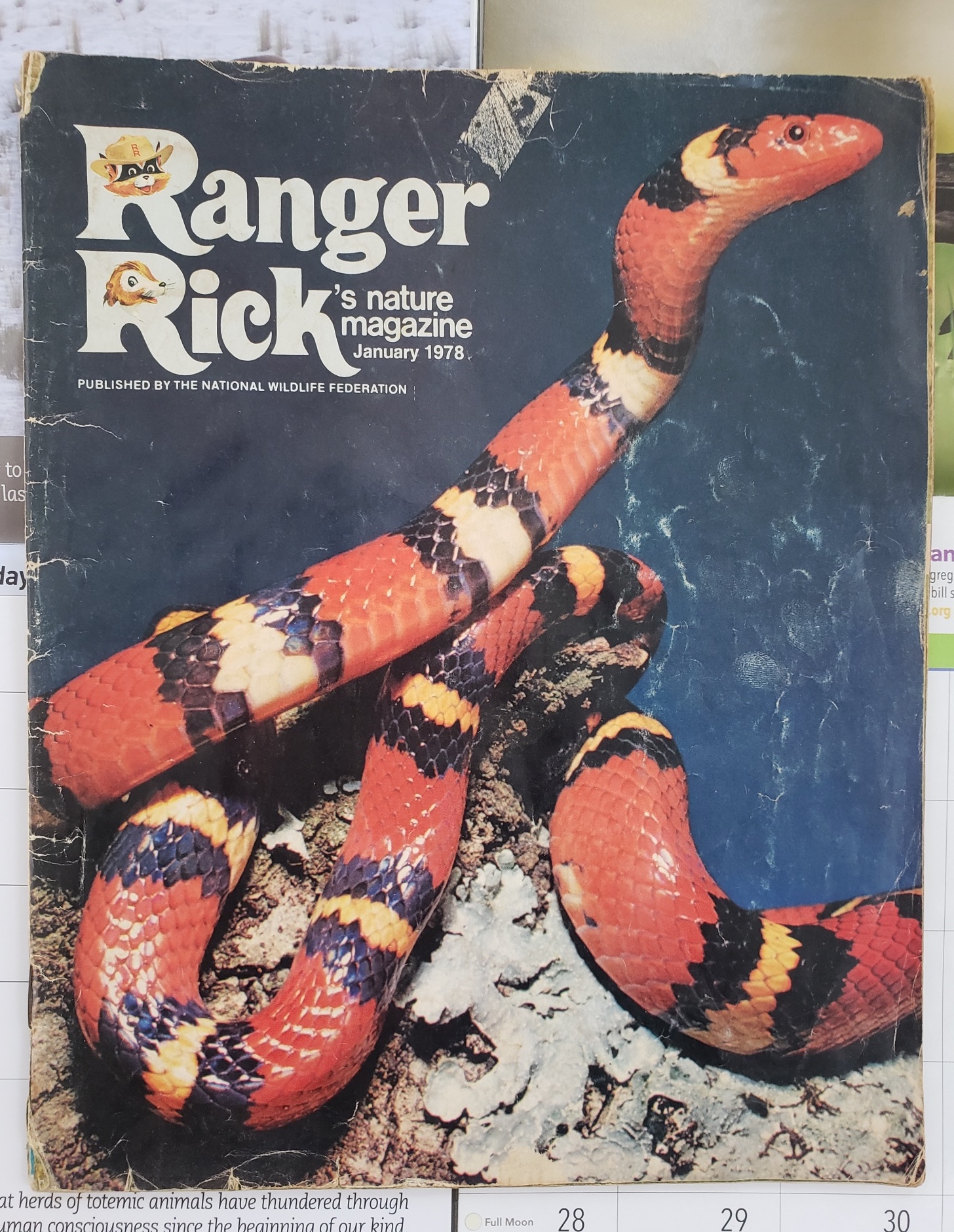
The Ranger Rick trio comes to a close with this Squirrel of the Week post on the first magazine I ever received from the National Wildlife Federation (NWF). Jam-packed with nourishment for the budding conservationist, plus some fun vocab, like “nacre”! I hope you enjoy it.

Read Full Post »

Another Peep from a Pack Rat

Willie the White-throated Wood Rat (aka, Pack Rat)

The Year of the Ox continues, this time with the uncelebrated creature pictured above and much much more in my new post on the Squirrel of the Week blog. At least here we have a rodent! I hope you enjoy it.

Read Full Post »

A Peep from Squirrel of the Week!

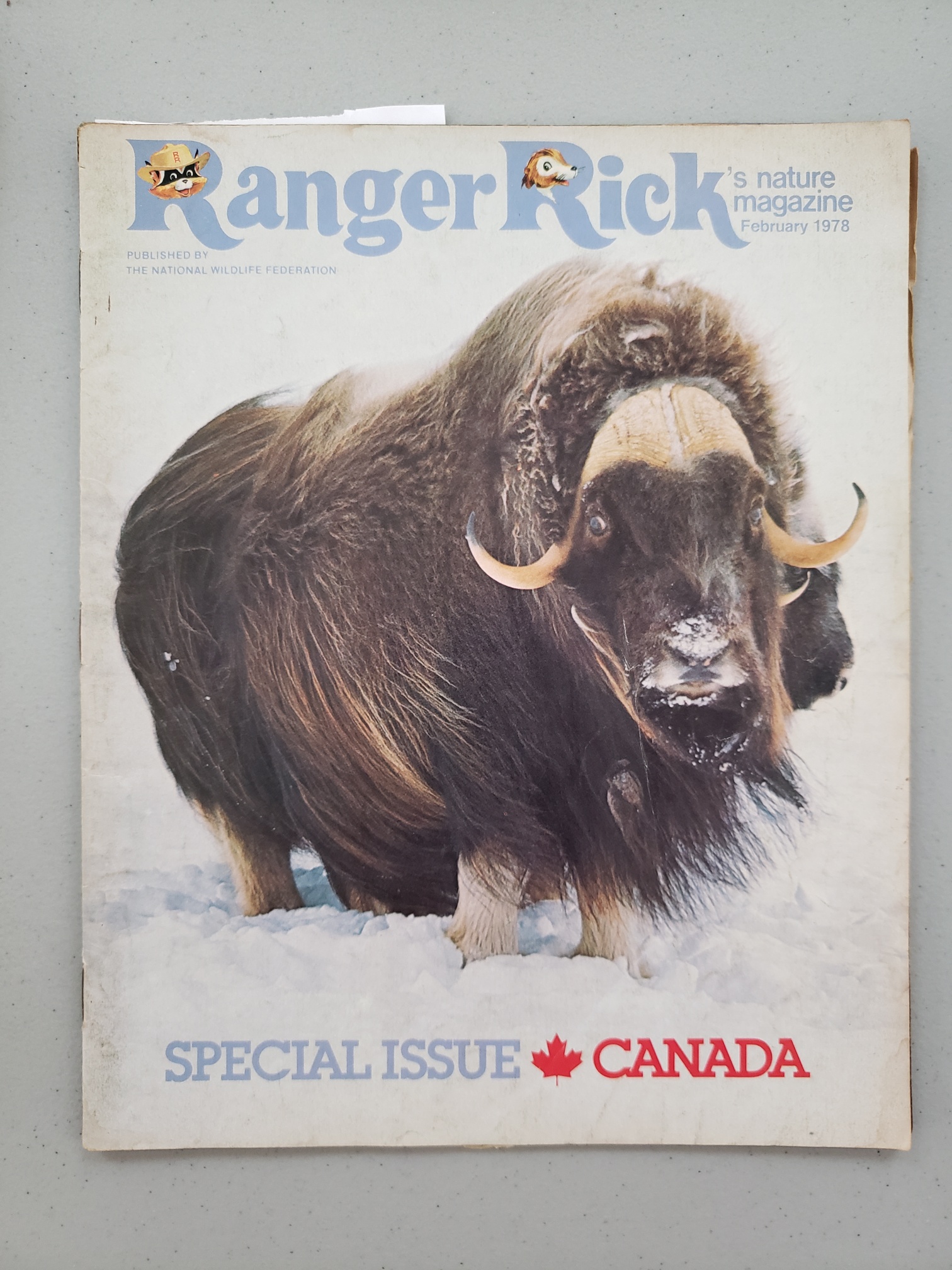
Turns out it’s the Year of the Ox, and how happy a coincidence that an issue of Ranger Rick explored in a new post at my Squirrel of the Week blog features one—a Musk Ox in Canada—on its cover! I hope you enjoy it.

Read Full Post »

Older Posts »