Reflecting on the two lovely blue-covered books I just read, I’m struck by two things, one seemingly superficial, one psychological, both important to me. The first book is “Hour of the Beaver” by Hope Sawyer Buyukmihci, from the early 1970s. The other is from the early 1980s, “Tennis My Way” by Martina Navratilova. That decade span is a nice envelope around my childhood.
The first thing is just the sheer quality of the books from back then. There are many better examples, but the beauty and durability of the hardcovers from that era is comforting and speaks to a time when publishers could afford to “care.” The textures of the covers, the quality of the paper, the fonts, the white space on the pages, the generous illustrations, all speak to me and reflect the value of the book’s contents. (Dustjackets are shown in the second group of photos.)
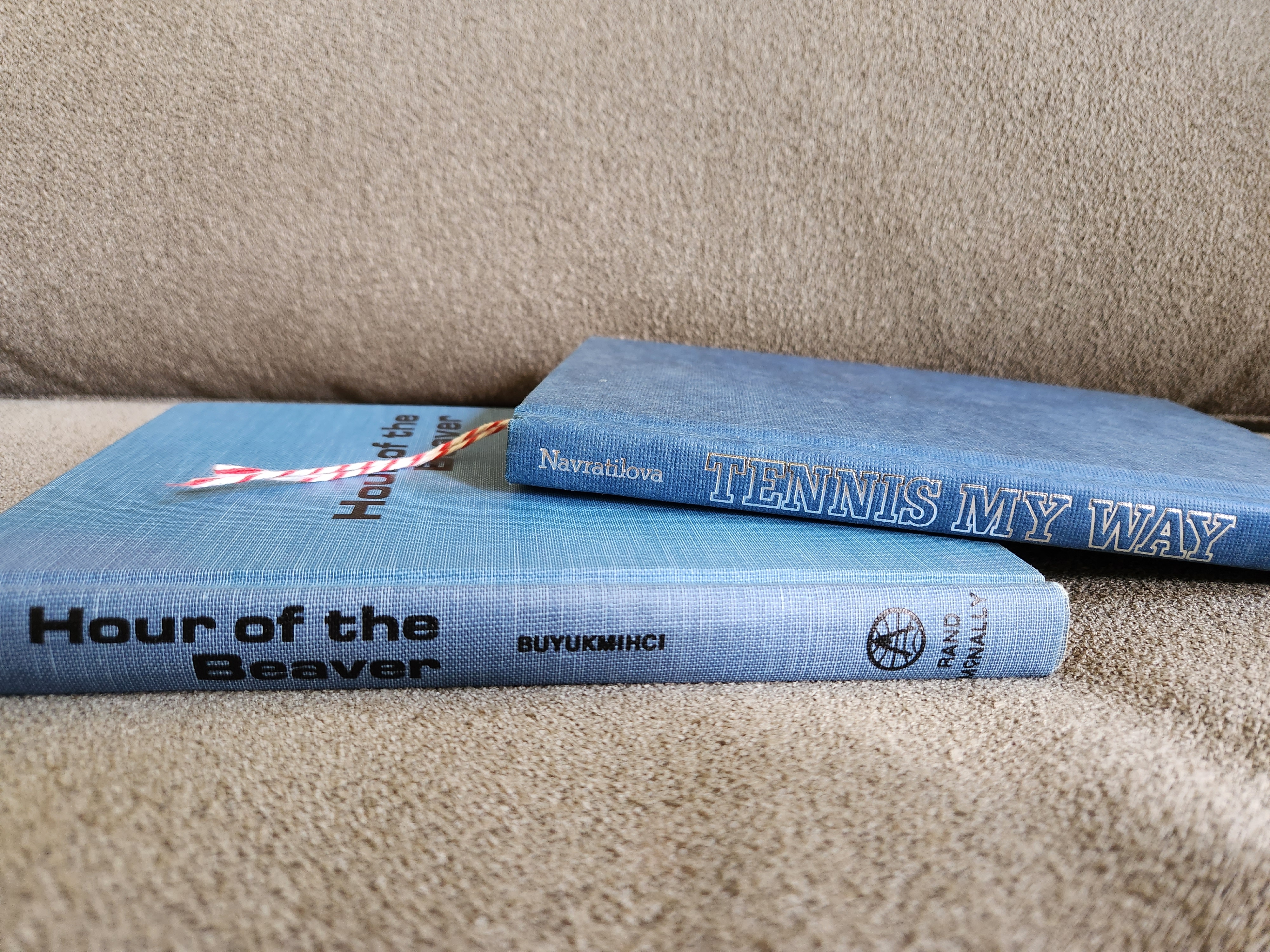
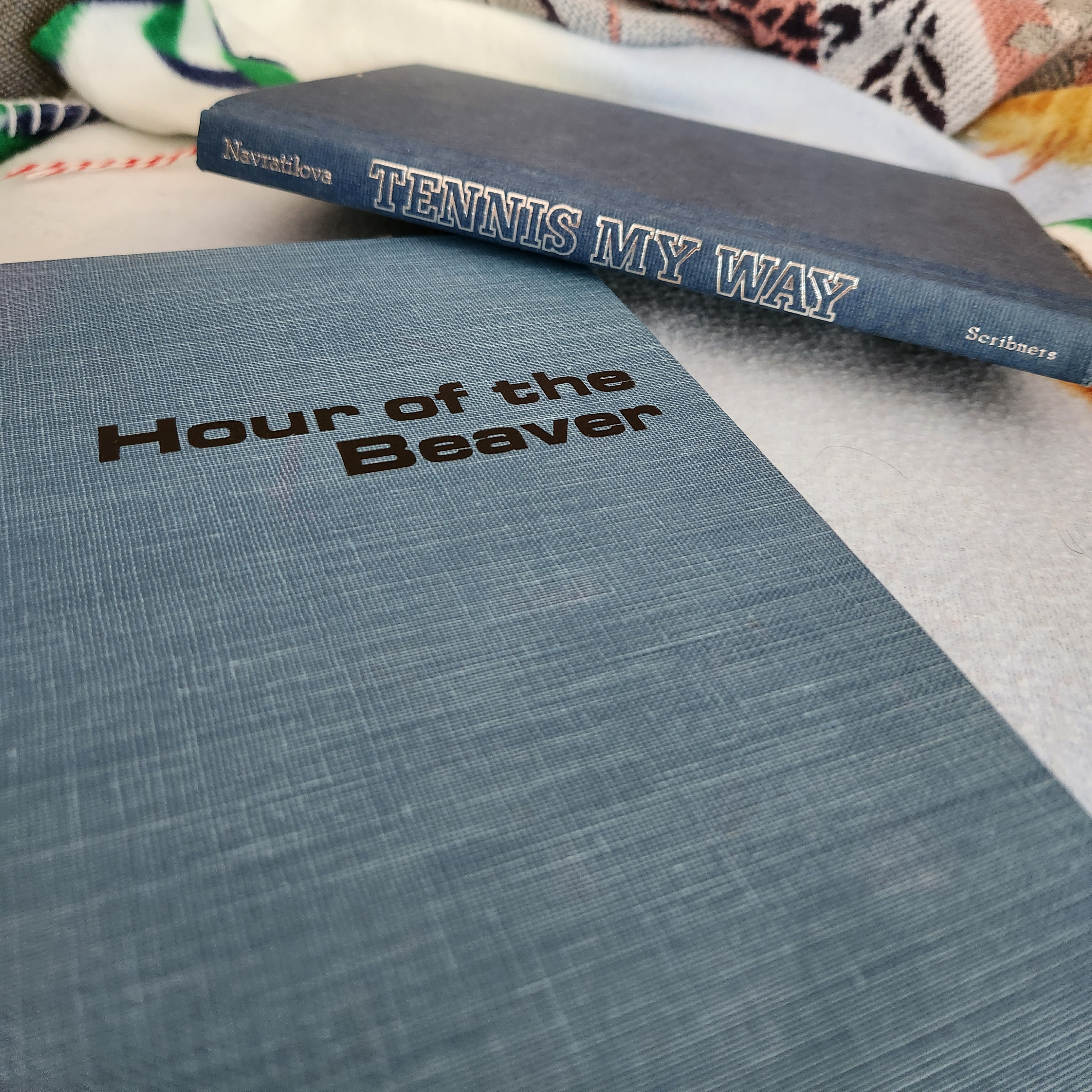
The second thing is just how much we are made in our formative years. Luckily, in my case, the person who was developing in this time—and continues to develop, I hope—was influenced by enlightened people like these two authors. “Hour of the Beaver” is a passionate argument for conservation and seeing other creatures’ point of view, with simple, eloquent seeds of the arguments against hunting and converting wild lands into human ones. Martina’s book is a no-nonsense guide to tennis, shedding light on one of its greatest player’s opinions and mindsets, with lessons that can be applied by anyone who wants to apply themselves to any pursuit!
As much as we’ve learned and been tidal-waved by data and developments since these books were written, the fundamentals these authors share are touchingly written and are good reminders that there were indeed people in the past who had ideas that are point the forward to this day. In fact, Navratilova and Buyukmihci build upon foundations laid long before they took to the pen. They certainly seem to influence me more strongly than many a contemporary figure. Why is this? The aesthetic or style of their message? Their roles as “elders” in my formative years? It’s hard to say, but I’m happy they’re (still) around.
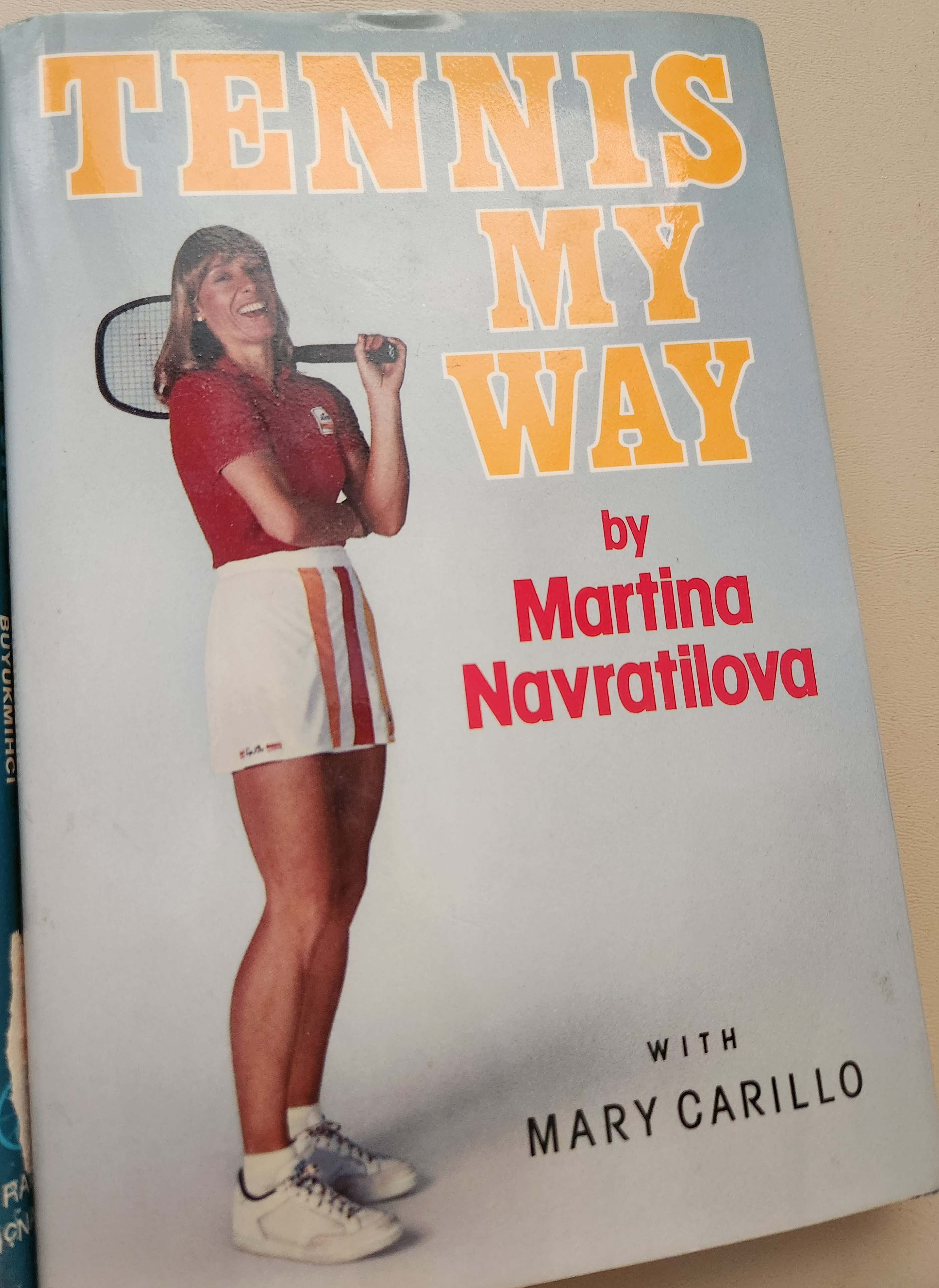
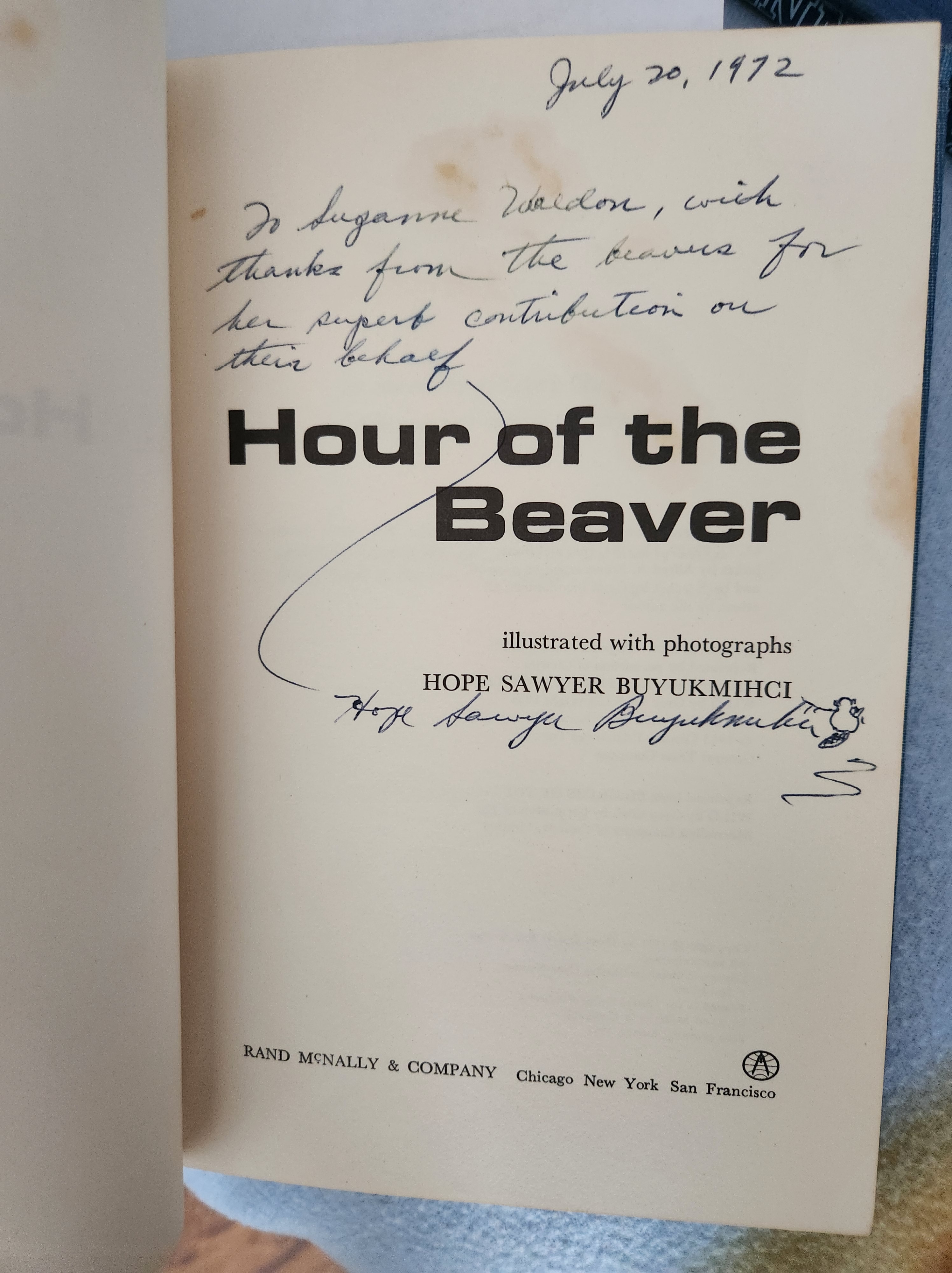

Incidentally, Martina’s autobiography (also written in the early ’80s) is also well worth reading, a real testament to her directness through her detailed story of emerging from the Iron Curtain and finding her way in the world.
You can find mini-reviews of these books, and many more, on my Amazon profile page. Here’s the link to them. Keep an eye on my conservation thoughts here, at squirreloftheweek.org.









 stevesunusual...music and more